


Special Events
David Elder Lecture - Dr Christie Maddock

Why Are We Still Using Rockets? The weird, wonderful and occasionally outrageous history of reaching space.
Dr. Christie Maddock, University of Strathclyde
Getting into space is difficult. For more than a century, scientists and engineers have been dreaming up increasingly ingenious — and sometimes outrageous — ways to do it.
From the first rockets to the giants that carried humans to the Moon, our journey into space has been filled with extraordinary achievements. But what about the ideas that didn't quite make it? Ocean-launched rockets the size of skyscrapers, spacecraft fired from giant accelerators, hypersonic spaceplanes, and even elevators stretching tens of thousands of kilometres above the Earth.
Some of these concepts were surprisingly practical. Others encountered seemingly insurmountable engineering challenges. A few might yet become part of our future.
Join us for a journey through the history, science and imagination of space launch, exploring the brilliant, bizarre and occasionally bonkers ideas behind one of humanity's greatest engineering challenges: escaping Earth.
About the speaker

Dr Christie Maddock is a Senior Lecturer in Aerospace Engineering at the University of Strathclyde, specialising in the design, modelling and optimisation of space transportation systems. Her research explores how we can develop safer, more efficient and sustainable ways to access and operate in space, from rocket propulsion and launch vehicle design to advanced computational methods and future space technologies.
About the David Elder Lectures
Glasgow Science Centre is proud to host the David Elder Lectures in partnership with the University of Strathclyde's Department of Physics. This lecture is open to adults and interested young adults. Please ensure you arrive at least 10 minutes before the event begins. After the start the doors will be closed and access will not be permitted.
When is this on?
| Thursday 18th March | 19:00 |
This event is available as a standalone event. The tickets can be purchased below
Your donations make a real difference!
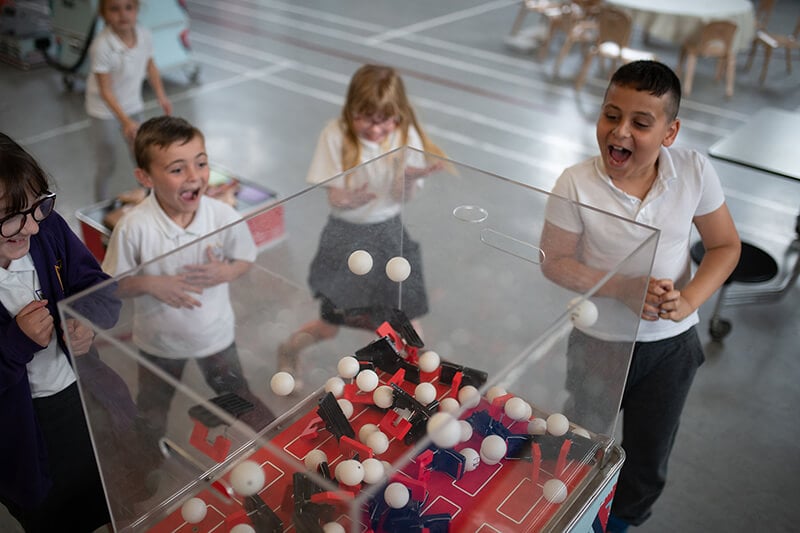
As a registered Scottish charity, our mission is to engage and inspire people of all ages and backgrounds to discover and enjoy science. Your generosity will allow us to continue to provide fun and informative outreach programmes for young people and to work with communities from the local area and across Scotland, making a real difference to people's lives. We appreciate your support.
Science Passport
Get unlimited access to the Science Mall for a year when you become a member of our Science Passport scheme.
Price
£44.25 per adult | £39.45 per concession | £34.50 per child | Under 3s go free!
Buying a Science Passport
The best way to purchase is online as you will be able to manage your Science Passport and renew through your online account in future and we will keep you up to date when your year is nearly up.